Agents everywhere
the promiseAutonomous agents generate design, architecture, code, and tests, then ship through canary releases: the whole lifecycle, not a code snippet.
What Findry is
Findry is the control plane between an enterprise requirement and production. It carries a change through the whole software development lifecycle: design, architecture, code, tests, and a gated release, governing every step so the speed is safe. AI coding is commoditised; the defensible thing is evidence-backed understanding of the whole software estate and the governance wrapped around every autonomous change.
A control plane is more than a code generator. Findry pairs autonomous execution with an evidence-backed graph, embedded policy, and an audit trail, so a requirement can move at machine speed without giving up the controls a regulated enterprise depends on.
Autonomous agents generate design, architecture, code, and tests, then ship through canary releases: the whole lifecycle, not a code snippet.
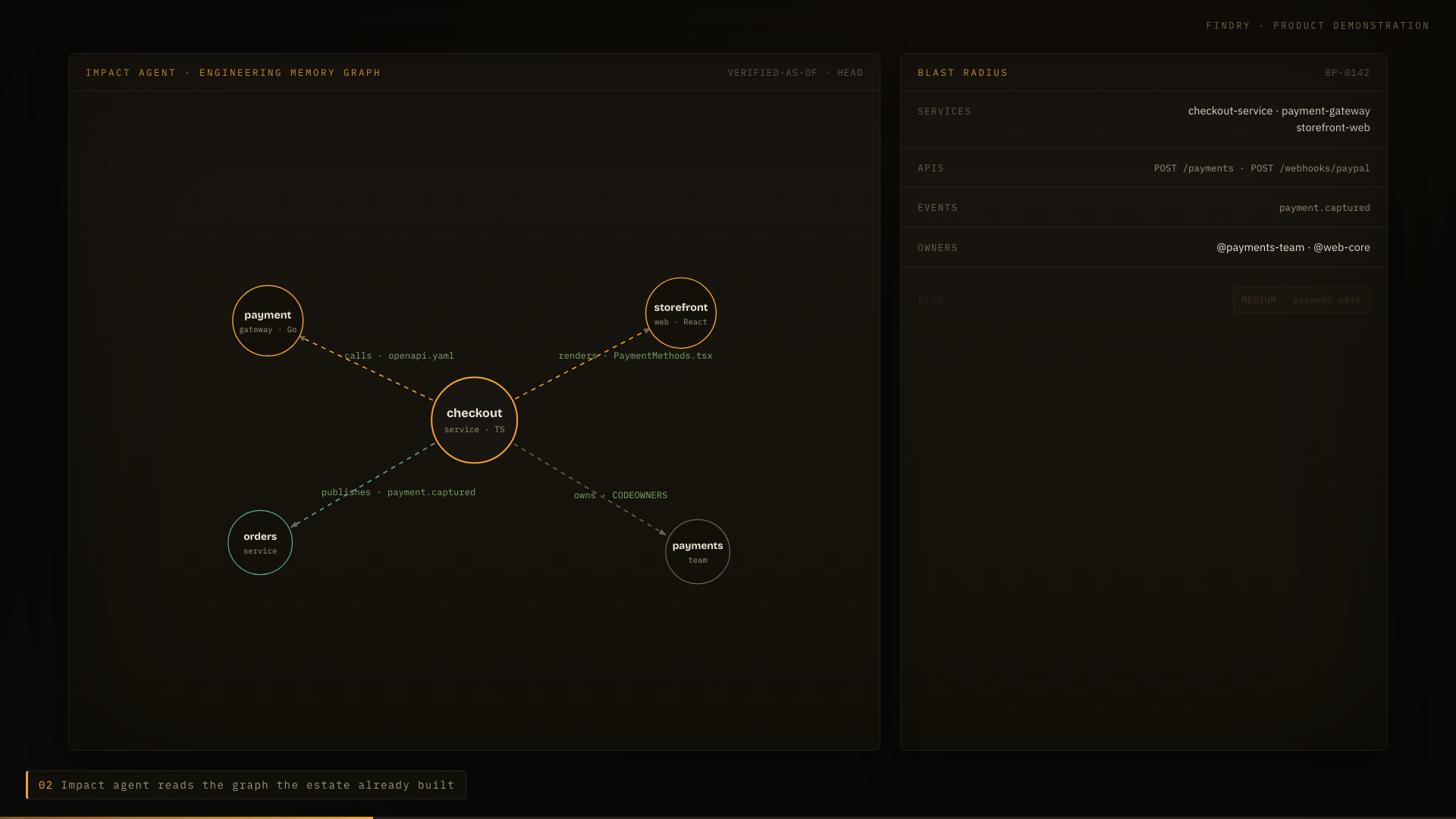
Repository parsing builds an evidence-graded graph of ownership, coupling, and blast radius, to coordinate multi-repo, multi-team change safely.
Graph-aware policy is evaluated in-line at every gate, so standards and approvals apply from the first stage, not bolted on at the end.
Every step emits immutable evidence with exportable artifacts: the reason a regulated enterprise can let autonomous agents ship at all.
Read them in order and the whole thesis is there: agents make it fast, the graph makes it safe, and auditability makes it permitted.
The control plane resolves into six pillars across two ownership classes. Three Findry builds as its own moat surface, the Brain, Blueprint, and Ledger. Three it orchestrates, Forge, Guardrails, and Ship, behind adapter interfaces. One story throughout: “I want this feature, show me it deployed in production.”
The Engineering Memory Graph: an evidence-graded model of the software estate, cross-repo, ownership, incidents, and deploys, every edge carrying provenance, confidence, and freshness.
Requirement to impact across the software estate to a governed change plan: owners, risk, tests, rollout, rollback. Reviewable specs in product language, not wireframes.
An append-only, hash-chained attestation trail for every lifecycle step. Standards-aligned, and Sigstore-signable later.
Agent execution via adapters: the Findry-managed default agent or your own. Findry never builds its own code-generation model, the graph is the moat, not the model.
A policy decision point with graph-aware rules: a change touching payment_transactions requires Risk approval and contract tests before it can proceed.
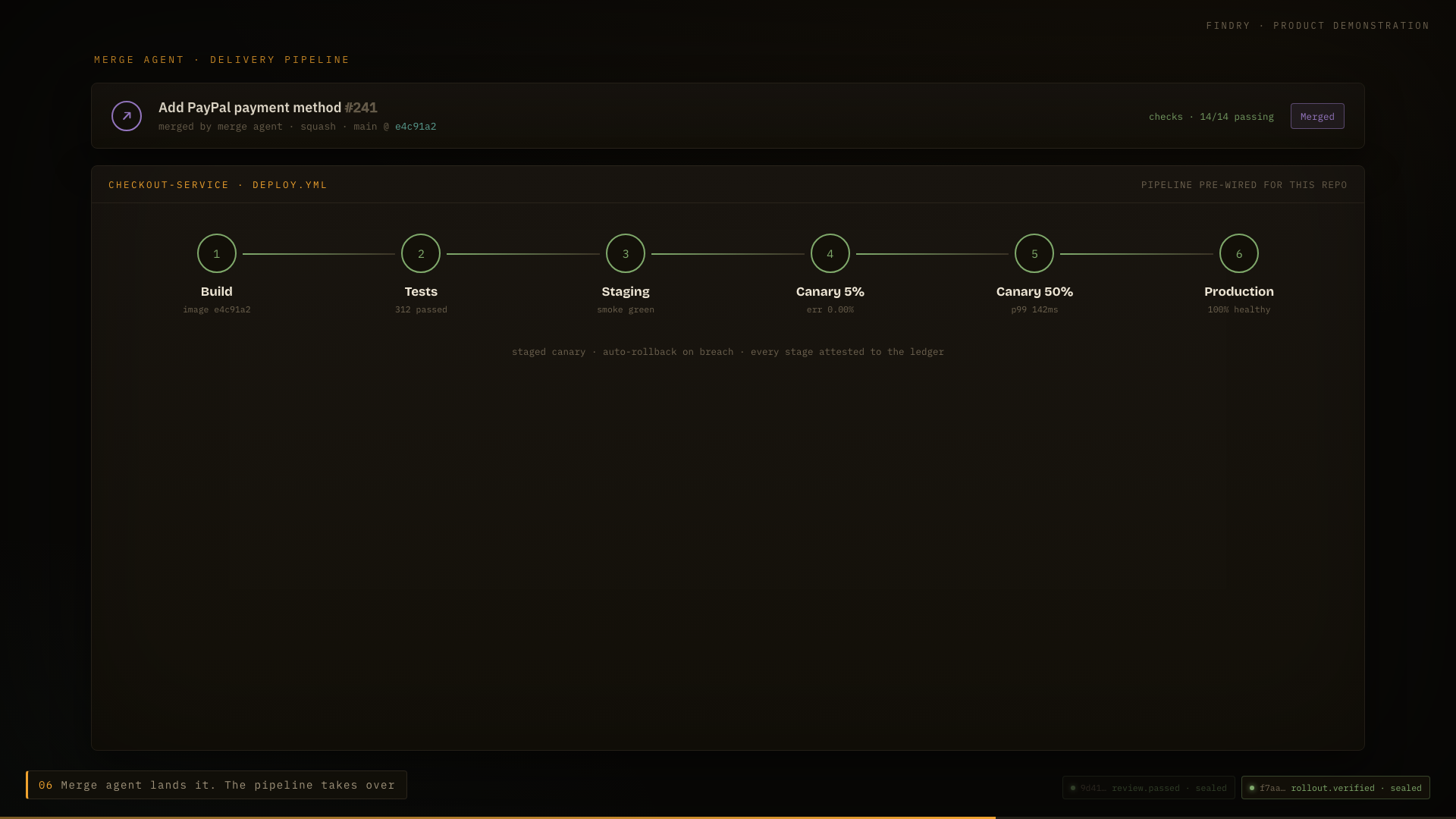
The cross-repo rollout plan generated from the graph, then conducted, watched, and gated through your continuous-delivery system.
Every orchestrated slot ships a working Findry default and accepts a replacement behind the identical adapter contract. Start on the batteries-included defaults, then swap in your own agents, scanners, and continuous delivery, one at a time, without changing how the control plane drives them.
default
A Findry-managed default agent runs out of the box.
bring-your-own
Bring your own agents through the Forge adapter.
default
Default policy and security gates ship in Guardrails.
bring-your-own
Plug in your own scanners behind the same gate contract.
default
A default rollout conductor drives the canary in Ship.
bring-your-own
Point Ship at your own CD; it conducts and gates it.
Findry never builds its own code-generation model. The moat is the evidence-backed graph and the governance around every change, not the agent that writes the diff.
Next: read the end-to-end sequence in how it works, or go deep on the mechanism in the Engineering Memory Graph.
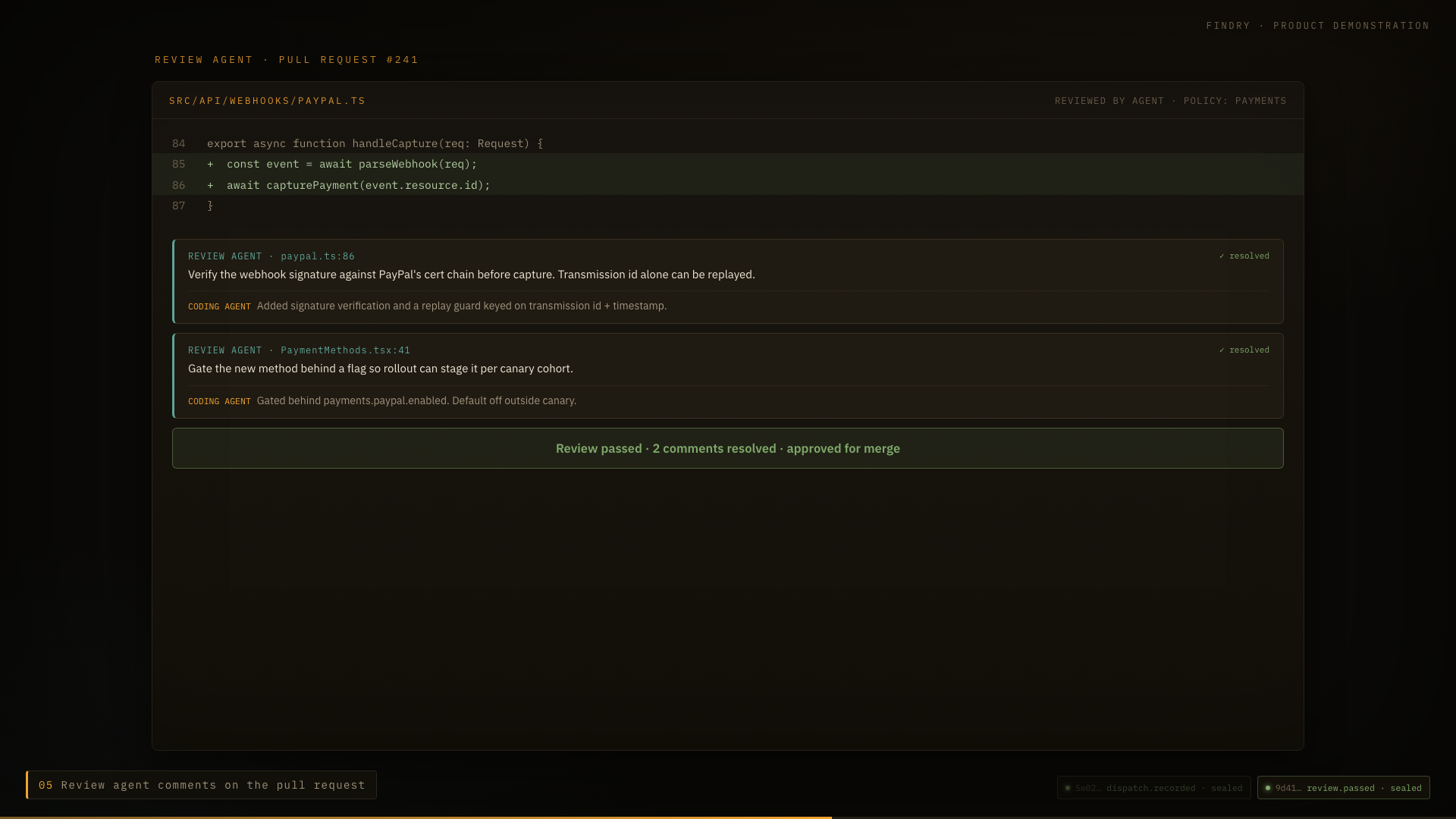
Three moments from one governed run in the Findry console: impact scoped on the graph, the change reviewed on the pull request, and a staged canary carrying it to production.