The coordination quarter
Planning consumes 8 to 16 weeks before code starts. That time is not engineering, and no coding assistant touches it.
Ask a platform lead where a feature's time goes and the answer is rarely "writing the code". It goes to finding out what the change touches, agreeing an order, and getting sign-off from people who were not in the room when it was scoped.
Where the weeks actually go
A requirement arrives. Before a line is written, it has to survive a walkthrough across six to twelve teams, three to five architecture review cycles, and enough cross-time-zone scheduling that the calendar becomes the critical path.
- PRD walkthroughs across 6 to 12 teams: 2 to 6 weeks
- Architecture review cycles: 3 to 8 weeks, and 15 to 30 hours of meetings
- Cross-time-zone scheduling drag: 1 to 3 weeks
Half to seventy percent of the delivery timeline is spent before the build starts. That is the number worth attacking, and it is the one that coding assistants leave exactly where they found it.
Why faster typing does not help
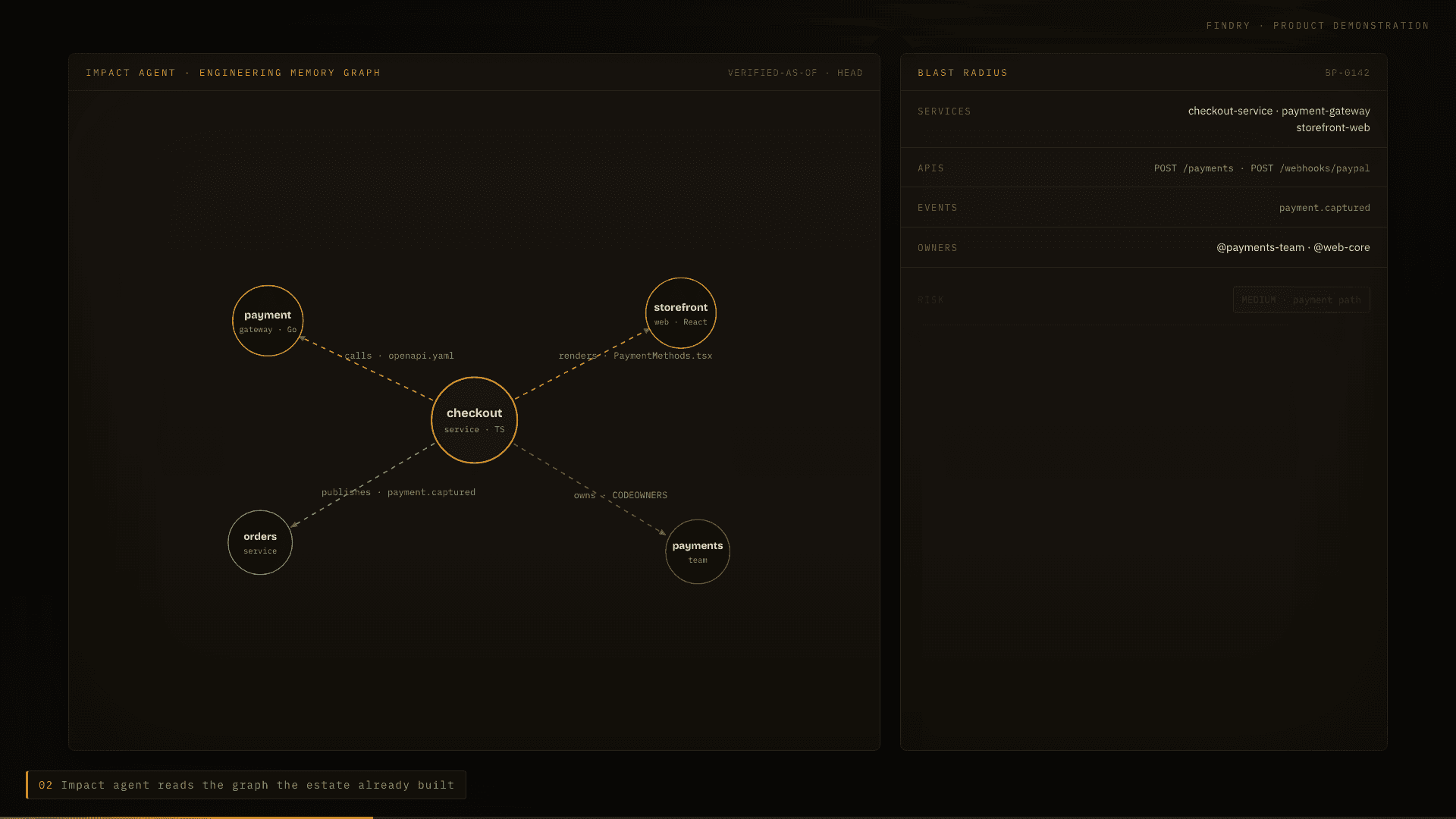
The bottleneck is not authoring. A model will write the change, and the next one writes it more cheaply. What no model does is tell you that this requirement lands on fourteen services across nine repositories, which of them has to move first, and what proves the whole thing was safe.
Generic agents know files, and go looking for the rest.
That search is the coordination quarter in a new costume. It is faster than a human doing it by hand, and it is still discovery rather than knowledge.
What replaces it
An estate that has already been read. When the impact set is computed from a graph before any inference starts, the sequencing question is answered at submission rather than negotiated across a quarter.